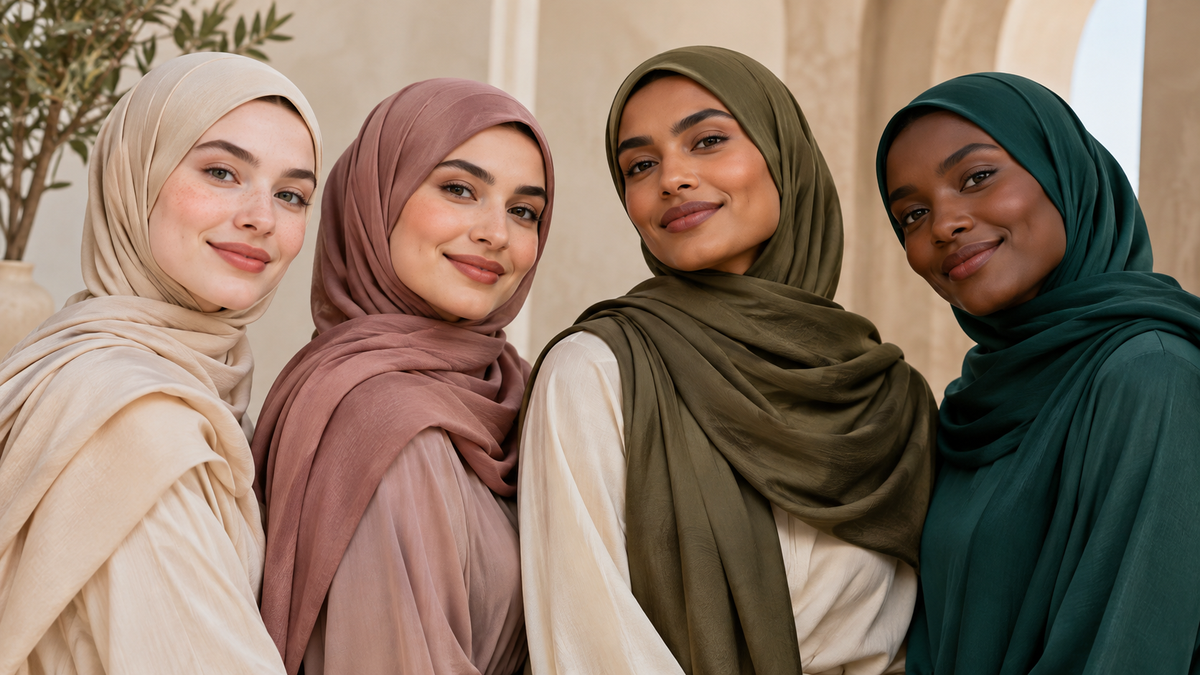
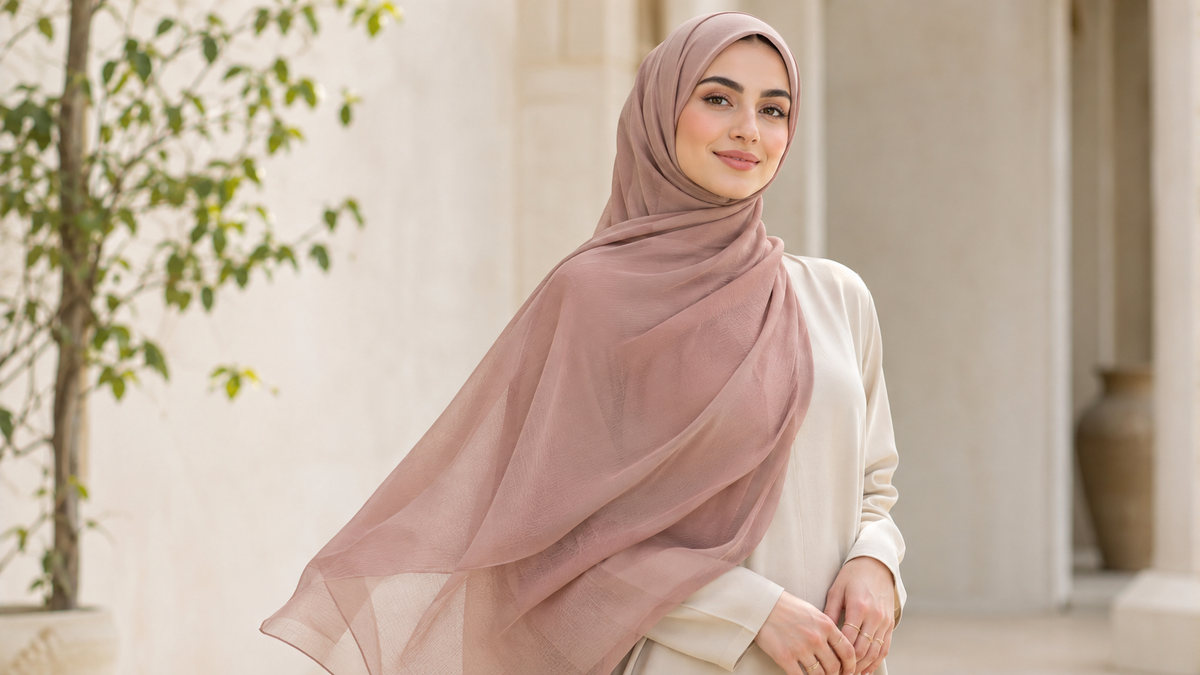
When cotton is too stiff and chiffon slips off, a viscose hijab is what people find themselves with. Soft, drapes and doesn't require an undercap. It can also be easily creased and shrinks when the fabric is handled the wrong way. This guide will delve into how viscose behaves through the day, and how to keep it looking its best after months of wear.
What is viscose, and is it natural?
Viscose is a form of regenerated cellulose fibre. Manufactured cellulose is prepared from purified cellulose from plants, usually wood pulp, which is dissolved and then spun into new fibers by manufacturers. According to the U.S. labeling regulations, this type of fiber is labelled “rayon,” and some varieties can be designated as “viscose.”
Viscose is derived from plants, but it undergoes a chemical process and is not classified like cotton or silk. It's still going to be referred to as natural. Any scarf you purchase as bamboo is almost certainly viscose. When bamboo pulp is chemically processed, it should be called bamboo rayon or bamboo viscose.
How a viscose hijab feels and drapes
Viscose has the coolness and softness similar to fine lawn cotton, but with more movement. It's breathable and absorbs sweat instead of repelling then which is a primary reason why people favorite it within the summer.
Most woven viscose has a natural texture that allows it to hold itself well. Many people have used one or two and some manufacturers make it in the shape of a scarf to be worn without an undercap.
Drape is where viscose really stands out. It's soft and folds around the face and shoulders, making it ideal for loose and draping styles. Not really suitable for sharp and structured looks.
Wrinkles, shrinking and other honest downsides
Ordinary viscose has low wet strength. An Ohio State University textile fact sheet explains that it can stretch or shrink when wet, and that untreated rayon can shrink by as much as 10 percent in a washing machine.
It creases easily, too. A scarf folded in a drawer or crushed under a bag strap will show it. That’s why so many viscose scarves come with a crinkle finish, since the texture hides fresh creases.
Cellulose fibres aren't as tight as polyester, so it is important to wash a new scarf first, not at the same time as other clothes.
Viscose vs modal hijab: what’s the real difference?
Modal is a chemical modification of viscose, also known as high wet modulus rayon. It retains a lot more strength if wet and therefore will be better machine washable and will shrink less.
|
Viscose |
Modal |
|
|
Feel |
Soft, slightly textured |
Softer, smoother |
|
Strength when wet |
Low |
Much higher |
|
Shrink risk |
Moderate |
Low |
|
Price |
Usually lower |
Usually higher |
In the hand, they feel close. Some brands find the weights barely differ and the real gap is scarf size, so compare dimensions as well as fiber.
Is viscose good for hijab wear every day?
For most people, yes. It’s a strong fit if you:
-
live somewhere hot and want a breathable cotton alternative
-
prefer soft, draped styles to crisp ones
-
want a scarf that stays in place with minimal pinning
-
travel often and choose a crinkle finish
Not the ideal choice for people who prefer a freshly creased scarf or for those who wash all clothes with warm water.
A quick checklist before you buy
-
Read the label.
All three of these terms (“viscose,” “rayon,” and processed “bamboo”) refer to the same group of fibers, commonly known as rayon. -
Choose by washing habits.
If you often machine wash, choose modal or some other mixed fabric. -
Check opacity.
Hold the viscose hijab fabric up to daylight. Lightweight versions can show through in pale colors. -
Look at the hems.
Neat rolled or overlocked edges fray less. -
Wash prints separately.
When washing a printed viscose hijab, wash it separately the first few times, as prints have a tendency to bleed when saturated.
How to wash and care for it
-
Use cool water and mild detergent if washing hands or if label specifies use a delicate cycle.
-
Gently squeeze water out. Wringing stretches the fibers while they’re weak.
-
Dry it flat or over a rail. Never put it in the tumble dryer.
-
Steam it, or iron it on medium heat while it’s slightly damp.
The most common mistake is hot water followed by the dryer, which is the quickest way to end up with a shorter scarf.
Final Statement
For everyday wear, particularly during warmer temps, a viscose hijab is a comfortable and breathable option. Keep in mind that it will most likely need to be creased, and remember to wash it gently. Modal is a little more expensive, yet is more durable if you experience a lot of machine washings. Browse current styles at Unique Hijabs.
FAQs
What is a viscose hijab?
It’s a headscarf made from viscose, a soft fiber regenerated from plant cellulose. People choose it for breathability and a fluid drape.
Is viscose a good fabric for a hijab?
Yes, especially for warm weather and soft styles, since it breathes and grips well. It does crease easily and needs gentle washing. Therefore, viscose is good for a hijab.
Does a viscose hijab wrinkle?
Plain viscose creases fairly easily. A crinkle finish hides it, and a quick steam fixes the rest.
Is viscose the same as rayon?
Yes. Viscose is an accepted label name for a type of rayon, and the FTC classifies lyocell as a rayon subclass too.